The hardest parts of going abroad were never the work. They are the language wall, never having your work measured against a standard, and proving how good you are to an employer who has never seen you. Off-the-shelf tools fix none of them, so we built our own: an AI teacher, an examiner that looks at your work, and a record employers can trust.
Three walls stand between an Indian worker and a legal job abroad, and none of them is about skill. We didn't accept any of them.
Sixteen months of classroom language is the single biggest reason good candidates give up: a year and a half of fees and waiting before the route even begins. The classroom teaches everyone the same way. Nobody learns that way.
Nobody has told you how good your work is against a written standard. You are passed or failed on the judgement of whoever happened to be standing there, once, and rarely told why. A skill you have never seen measured is a skill you cannot argue for, and cannot improve.
Even a true grade is worth nothing if it cannot travel. An employer six thousand kilometres away has never seen you, has no way to check what you were told, and no reason to take your word for it. When nobody can check your skill, you are paid the lowest wage anyone will guess.

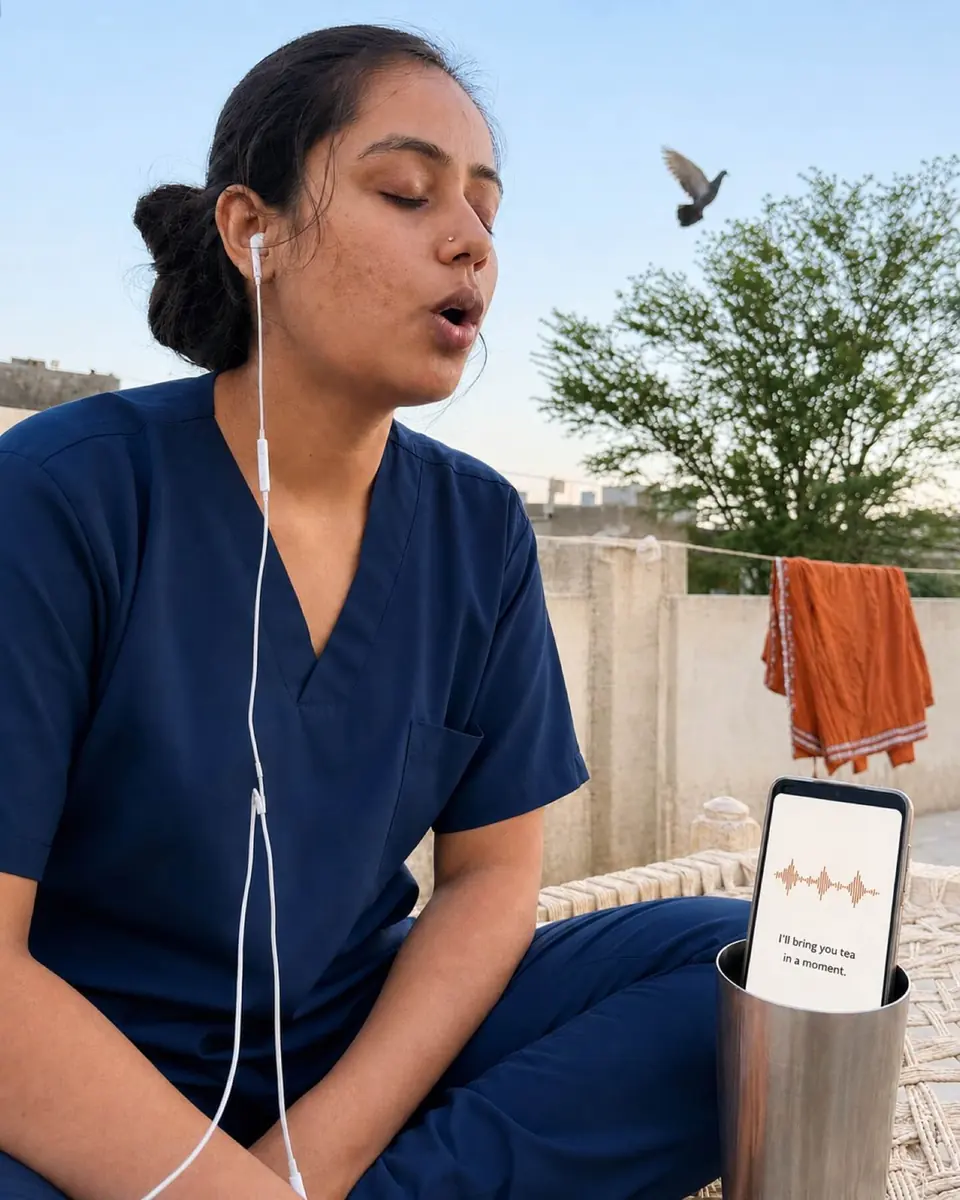
It learns you while it teaches you: your pace, your strengths, your weak spots, a track built for you alone from the best language research. German straight from ਪੰਜਾਬੀ or हिंदी, no English in between. English for Australia? The same way. You come out ready to live and work there, not just pass the test.
The language in 6 months, not 16*. That is the difference between a plan your family can hold and a route that dies in a classroom.
The method is grounded in peer-reviewed research from ten world-class institutions: Harvard, MIT, Stanford, Princeton and Cambridge among them. Every study is linked on the Bhasha page, open to you.
*To the level your route asks for, at full attendance. Indicative, never a promise.
How Bhasha teaches, the research behind it, and the app
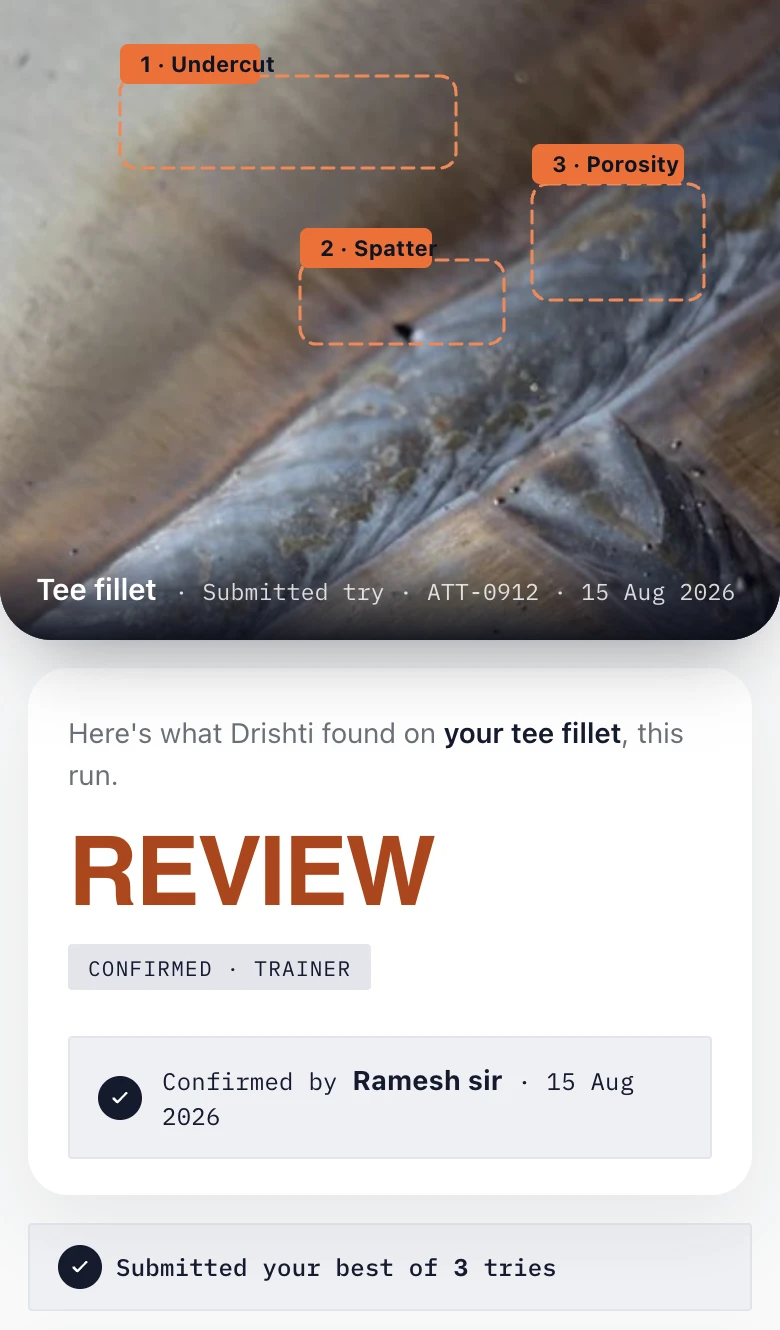
It grades the work, not the person. Photograph your weld and Drishti marks what it finds on the picture itself: undercut along that edge, spatter here, porosity in that corner, and tells you where each one sits against the standard. You see exactly what your trainer sees, on the same photograph.
It judges against ISO 5817, the international acceptance standard for welds. Drishti reads those rules from a published rulebook it cannot rewrite, so a grade can be argued with: by you, by your trainer, by an employer. Criteria we invented ourselves would not survive that argument, so we did not invent any.
A person still signs it. Drishti's finding goes to your trainer, who confirms it or overturns it. What reaches your Kaushal Pramaan Book carries both: the evidence and a human name against it.
Welding first. The other trades follow once the welding line runs end to end.
Where the result goes: the Kaushal Pramaan Book
A certificate says you passed. The Kaushal Pramaan Book shows how good you are: every skill measured against the standard, the evidence attached, and laid out so an employer can decide from it directly. They see your work before they see your face, and pick you for it.
Training hours, certificates, employment history, employer feedback: your whole working record. It lives in DigiLocker, is verified against Aadhaar, and any employer anywhere can check it from a QR code. Yours, not ours: it stays with you.
The same rule runs this site: every number, checkable
What comes out of all three lands on the same public systems as your bank: Aadhaar for identity, DigiLocker for documents, UPI for money home. Not a private database you have to trust us with: infrastructure the country already runs on.
Your advisor calls you soon. Their name lands on your WhatsApp first, so you know exactly who is calling.
[V] Your number stays with your advisor