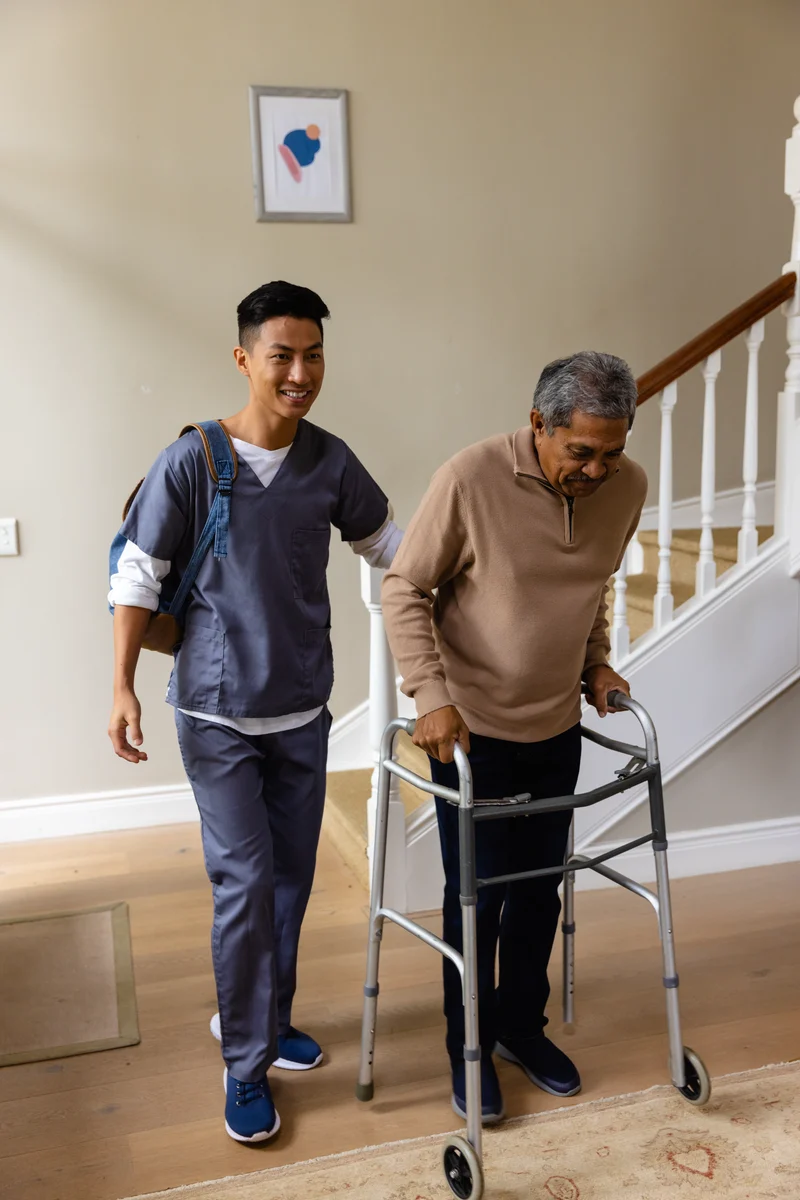
You can start from zero: the trade is built in you at our Chandigarh centre. Employer-sponsored, a written contract, and in Australia your family on the file.
This is one of the trades we build in you from nothing at the Chandigarh centre. Care standards, the language of the ward, the paperwork, all of it.
AU$58,000 to 72,000 a year, gross, at ₹66 to the dollar.
[V] Award wages · Fair Work Australia · checked Jul 2026NIS 6,443.85 a month, twelve months, at ₹31.7 to the shekel. This is the legal floor. Overtime and rest-day pay sit on top.
[V] Legal wage floor · Bituach Leumi · 1 Apr 2026Five years in Israel earns more than a lifetime of this work at home. ₹24.5 lakh a year, on a wage floor set in Israeli law, for up to 63 months. The same work in India pays ₹1.8–2.6 lakh a year, so one year there is worth nine to fourteen here. India-side figures are market estimates, stated as ranges.
This is the most protected route we run. The wage floor, the fee cap, the weekly rest day and the health cover are written into a government-template contract before you fly, and the bureau’s fee is capped by law at one month’s wage.
The honest part, up front: there is no PR track, and family does not join you. You go to earn, bank, and return. Maximum stay is 63 months.
¥3.0 to 4.5 million a year, at ₹0.56 to the yen. Firmed up on your call.
[E] Estimate · live corridor · firmed up on your callThe newest corridor, honestly: Japan is live, and the numbers here are estimates until our first cohort's contracts are in hand. What is fixed: the route is Japan's Specified Skilled Worker system, what you need is a skills test and a Japanese language test, and both are trained at the centre, from zero, in Kaushal Bhasha's method (Japanese taught from your mother tongue).
None of this is yours to work out alone. You get a route advisor with a name from the first call, and we teach the language, build the trade and prepare the file with you.
Which of the three corridors fits your life: settling, earning, or the newest route. That is the first question, mapped on the call.
English for Australia, Japanese for the Kaigo route, taught from your mother tongue in Kaushal Bhasha. For Israel the bar is English. Hebrew comes after you arrive, the same as for every other nationality.
The care standards your corridor is assessed against, built at the centre, whatever your starting point.
Your certification and your documents, matched to an employer in Australia, or the government channel in Israel.
Sponsored in your name. In Australia, your family joins the same file.
The ward, your first payslip, and the timeline your route promised.
Yes. This is one of the trades built entirely at the centre. What you need is training, not experience.
The honest comparison: Australia is the route that lets you settle, with a PR road and family on the file. Israel is the most certain route: the strongest wage protection, everything written down, but no PR and family stays home. Japan is the newest route, firmed up on your call. The call exists to make this choice with you.
The difference: in these countries, elder care is a licensed, regulated profession with a legal wage floor and a written contract. It is care the country cannot run without.
A government-template contract, 25 hours of weekly rest, health insurance from day one, and salary paid by the 9th. Fee caps are set by law, and passport confiscation is a crime there.
The fee depends on the route, and you hear it itemised, line by line, on the call and then in writing. 30% of it falls due only after you have both the job and the visa.
"Which route fits me?" Your trade, or no trade yet, your years, your English: matched to the country hiring for it.
"What will I earn?" The real range for your route, converted to rupees, with the source beside it.
"How far is PR?" The visa class, the years it takes, and your family's place on the file.
Your advisor calls you soon. Their name lands on your WhatsApp first, so you know exactly who is calling.
[V] Your number stays with your advisor